This blog post is going to be an exciting one because I can talk about one of my favourite areas of music and that music in film.
Why is film music such a passion of mine? Well, I spent my entire childhood going to the movies, watching DVD’s before bedtime, coming home from school and sticking the tele on to watch shows like Scooby-Doo. Like I mentioned in my first blog post, I grew up in the late 90’s/early 2000’s, the films that were being made were outstanding and so magical but without the music to go with those films and shows, I don’t think the magic would’ve existed.
How did film music even start? I wondered this and decided to conduct some research. I came across a thesis written for the degree of Doctor of Philosophy at the University of Sterling by Mark Brownrigg, titled “Film Music and Film Genre” (2003). Brownrigg talked about early use of music in film in the 1900’s and stated that “Music was used to ease the audience to the world of film, preparing them for what was to come” (Brownrigg, 2003, pg. 30) he then mentioned an example of how the film Mrs Miniver (1942) contains a ‘cue derived from the chimes of Big Ben’ that ‘underscores the heroine’s opening rush through London’ (Brownrigg, 2003, pg. 30). Here Brownrigg is discussing how music in film was first used to set the scene of a film, in later years to come, music in film was used a lot more imaginitively and took the film world to another level.
Brownrigg talks about how in the late 1900’s\early 2000’s, soundtracks would rely on melody and the music would evolve along with the narrative of the film. Brownrigg states that composers such as John Williams would use ‘quasi-symphonic techniques of variation, reorchestration and modulation, also displaying an intricate and impressive use of the leitmotif’. (Brownrigg, 2003, pg. 31) This took film music to the next level, instead of music just accompanying the film and setting an atmosphere, music became part of the structure to make a film so great. The use of leitmotif would act as a ‘musical “signature” to different characters, places, emotions and so on’ (Brownrigg, 2003, pg. 30). Star Wars (1977) is a great example of this, as soon as ‘The Imperial March’ is played we all know that a tall, scary guy in a shiny black suit with a breathing problem is going to appear on the screen.

In more recent times, our screens have been blessed with great films, a few of my favourite have been, the How To Train Your Dragon (2010-2019) series, Avengers Endgame (2019) and Frozen 2 (2019). Yes I know there are all kids films and yes they all made me cry but i’m a film nerd, that means I get more emotionally attached to films than I should do and it doesn’t help that the music is so impactful. The video I inserted below is an interview with composer John Powell, the genius behind the soundtrack to How To Train Your Dragon (2010-2019).
Powell has his own Youtube page and in some of his videos he shows piano rolls of his tracks for ‘How To Train Your Dragon‘ (2010-2019). This helps me with my own compositional strategy as it allows me to see how to structure compositions and what instruments to use where and when.
Another soundtrack that has become very helpful to me is ‘Opening’ a track from the film Far From The Madding Crowd (2015). The soundtrack in this film is completely orchestral and very minimal in terms of instrumentation, it shys away from the typical heavy orchestrated music heard in popular films, this could be due to the genre of the film, it’s a romantic film, therefore light instrumentation is recommended and the use of strings and piano is common. Brownrigg mentions in his thesis that ‘the prominent use of the instrumental combination of foregrounded solo piano and supportive strings’ are ‘very much a signature sound of the genre.’ (Brownrigg, 2003, pg. 156) he then continues to say that if tuba and drums were played during a romantic scene, it would not have the right effect on the atmopshere of the film.
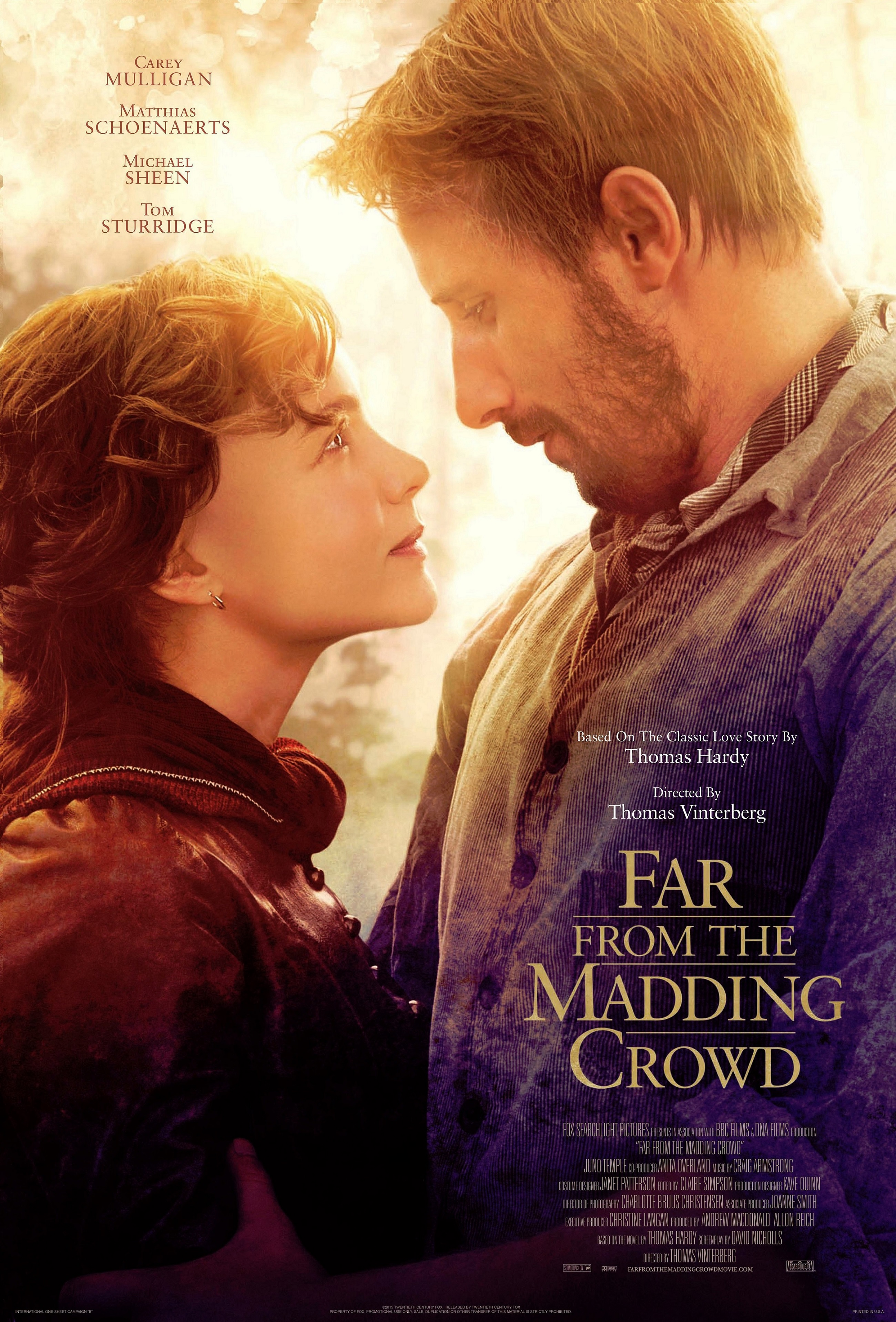
After reading Brownrigg’s thesis and listening to romantic orchestral music, I used the knowledge that I gained whilst studying this and incorporated it into my own music, I now feel confident that if asked to create a piece of music in the romantic style, I could deliver a composition quite suited to that genre.
In a bid to reflect the certain styles of music, I must have access to the right sounds and instrumentation. Unfortunately, I am a student so I can’t really afford to hire a full orchestra or professional solo players. So the way I get around this is Virtual Instruments, this allows me to compose musical scores on a low budget and still at a high enough standard for the industry. For example, I have recently purchased the ‘Joshua Bell Violin’ from Embertone, it sounds just like the violin used in Far From The Madding Crowd (2015). These technological tools help develop my skills at replicating real orchestral sounds which is a key skill to have when entering the music industry.

Sources:Variety (2014), Variety Artisans: Emotional Pleasures – The Music of ‘How To Train Your Dragon 2’,{online video}, 31 Oct 2014, accessible by: https://www.youtube.com/watch?v=5YkLOxMilnA, (video accessed on 18th November 2019)
MARK BROWNRIGG, Film Music and Film Genre, (2003), {acessed online}, University of Stirling, thesis, link to thesis can be found: https://core.ac.uk/download/pdf/40108516.pdf (thesis accessed on 18th November 2019)
JOHN POWELL (2019) How to Train Your Dragon: The Hidden World: 1m2a Busy Busy Berk, {online video} 22 Feb 2019, accessible by : https://www.youtube.com/watch?v=VeAxP5w2Vsc (video accessed 18th November)

